
- Why an Emergency Fund Matters
- How an Emergency Fund Calculator Helps You Plan
- How Much Emergency Fund Should You Have?
- 1. Three Months of Expenses
- 2. Six Months of Expenses
- 3. More Than Six Months
- What to Include in Your Emergency Savings Calculation
- Benefits of Using an Emergency Savings Calculator
- Clear Savings Targets
- Better Monthly Budgeting
- Motivation Through Progress Tracking
- More Realistic Planning
- Tips for Building Your Savings Emergency Fund Faster
- Automate Your Transfers
- Start Small
- Use Windfalls Wisely
- Cut Temporary Extras
- Keep the Money Separate
- Where to Keep an Emergency Fund
- Common Mistakes to Avoid
- Saving Too Little Without a Plan
- Using the Fund for Non-Emergencies
- Keeping It in Checking
- Ignoring Changes in Expenses
- A Smarter Way to Prepare for the Unexpected
Emergency Fund Calculator: Best, Must-Have Savings Planning Tool
Emergency fund calculator tools can take the guesswork out of one of the most important parts of personal finance: preparing for the unexpected. Whether you are dealing with job loss, medical bills, urgent car repairs, or surprise home expenses, having a financial cushion can make the difference between a temporary setback and long-term debt. Instead of relying on rough estimates, a calculator helps you set a realistic goal based on your income, expenses, and lifestyle.
Why an Emergency Fund Matters
Life rarely follows a perfect financial plan. Even people with stable jobs and carefully managed budgets can face sudden expenses. That is why a dedicated savings buffer is essential. An emergency fund is not meant for vacations, shopping, or planned purchases. It exists to protect you when life becomes unpredictable.
A strong savings reserve can help you:
– Cover essential bills during a period of lost income
– Avoid using high-interest credit cards
– Reduce stress during financial emergencies
– Stay on track with long-term financial goals
– Handle urgent expenses without borrowing from retirement savings
Without this safety net, even a relatively small emergency can create a cycle of debt that is difficult to escape.
How an Emergency Fund Calculator Helps You Plan
An emergency fund calculator gives structure to your savings strategy. Instead of asking yourself vague questions like, “Am I saving enough?” you can use real numbers to create a clear target.
Most calculators help you estimate:
– Your essential monthly living expenses
– The number of months you want to cover
– Your current savings balance
– How much more you need to save
– How long it may take to reach your target
This is especially helpful if you have ever wondered how much emergency fund you actually need. The right amount is not the same for everyone. A single person with a stable salary may need a different amount than a freelancer, parent, or household with variable income.
How Much Emergency Fund Should You Have?
One of the most common personal finance questions is how much emergency fund is enough. A popular rule of thumb is to save three to six months of essential expenses. However, that range can shift depending on your circumstances.
Here is a simple way to think about it:
1. Three Months of Expenses
This may be enough if you:
– Have a stable job
– Have dual household income
– Have low monthly obligations
– Work in a field with steady employment demand
2. Six Months of Expenses
This is often recommended if you:
– Are self-employed or freelance
– Support children or dependents
– Have irregular income
– Work in a competitive or uncertain industry
3. More Than Six Months
You may want a larger buffer if you:
– Own a home with major maintenance responsibilities
– Have medical concerns or unpredictable healthcare costs
– Are the sole income earner in your household
– Expect economic uncertainty or job market risk
A good emergency savings calculator can help you go beyond a general rule and create a more personalized goal.
What to Include in Your Emergency Savings Calculation
When using an emergency savings calculator, focus on essential monthly expenses rather than total spending. This gives you a more practical number based on what you truly need to survive a difficult period.
Include costs such as:
– Rent or mortgage
– Utilities
– Groceries
– Insurance premiums
– Transportation
– Minimum debt payments
– Childcare
– Medical essentials
– Phone and internet
You usually do not need to include nonessential expenses like entertainment subscriptions, dining out, luxury shopping, or vacation budgets. The purpose is to estimate the amount required to maintain basic stability during an emergency.
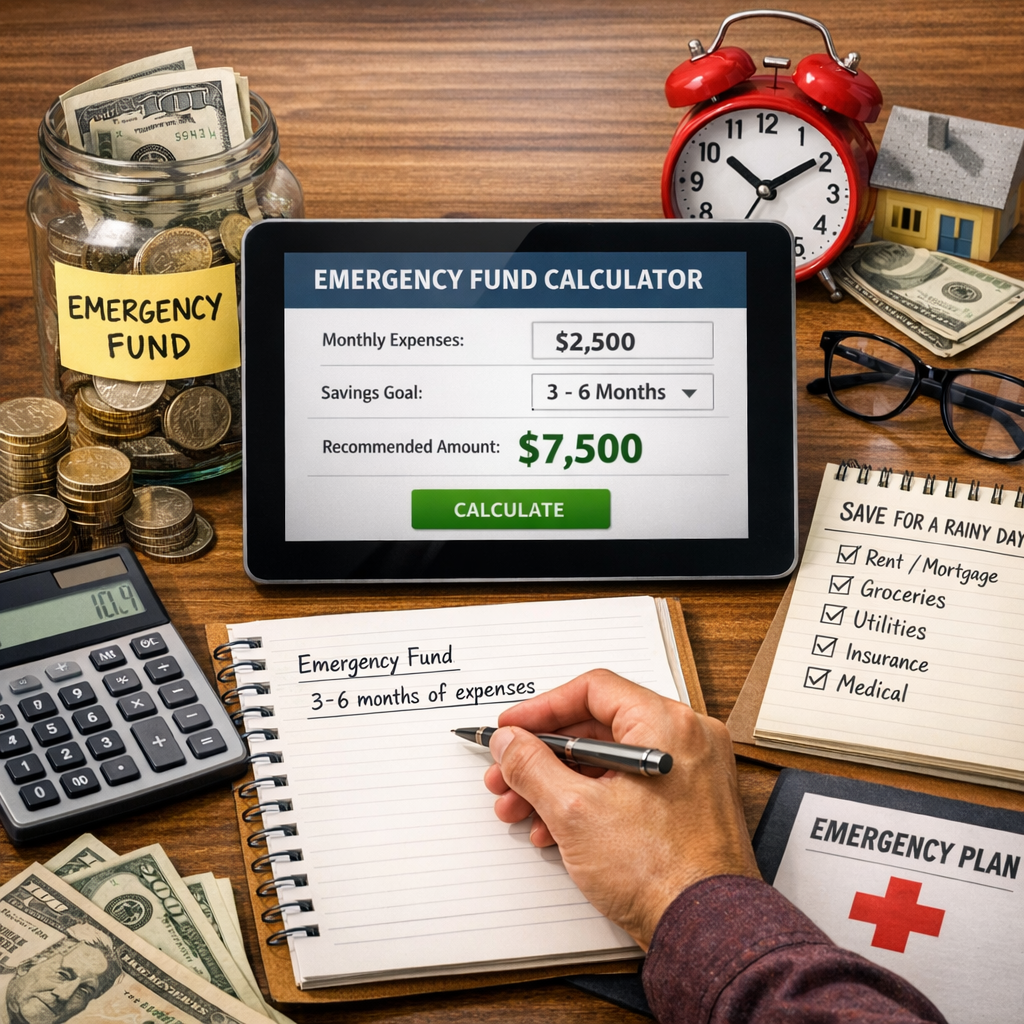
For example, if your essential monthly expenses are $2,500 and you want six months of coverage, your target would be $15,000.
Benefits of Using an Emergency Savings Calculator
A calculator does more than provide a number. It can improve your financial habits by making your goal feel more concrete and achievable.
Clear Savings Targets
Instead of saving randomly, you know exactly what amount to aim for.
Better Monthly Budgeting
Once you know your target, you can decide how much to set aside each month.
Motivation Through Progress Tracking
Watching your balance grow toward a defined goal can keep you motivated.
More Realistic Planning
A tool can help you balance emergency savings with other priorities like paying off debt or building retirement contributions.
In short, an emergency savings calculator turns a broad financial concept into a practical action plan.
Tips for Building Your Savings Emergency Fund Faster
Creating a savings emergency fund can feel overwhelming at first, especially if your budget is already tight. The good news is that consistency matters more than starting big.
Here are a few effective ways to build it faster:
Automate Your Transfers
Set up an automatic transfer from checking to savings each payday. This removes the temptation to spend first and save later.
Start Small
Even saving $25 or $50 a week adds up over time. The key is to begin.
Use Windfalls Wisely
Tax refunds, bonuses, gifts, or side income can help you make faster progress.
Cut Temporary Extras
Reducing dining out, subscriptions, or impulse purchases for a few months can free up money for your fund.
Keep the Money Separate
Store your emergency savings in a dedicated high-yield savings account so it is accessible but not too easy to spend casually.
Where to Keep an Emergency Fund
The ideal place for your emergency money is somewhere safe, liquid, and easy to access when needed. A high-yield savings account is often one of the best options because it offers:
– Easy access to cash
– FDIC or NCUA protection at eligible institutions
– Better interest rates than traditional savings accounts
– Separation from everyday spending accounts
Avoid investing this money in stocks or other volatile assets. Emergency funds are about stability, not growth. You need the money to be available when life happens, regardless of market conditions.
Common Mistakes to Avoid
Even with the best intentions, people often make avoidable mistakes when building an emergency reserve.
Saving Too Little Without a Plan
A small amount is better than nothing, but a calculator helps ensure your target is actually meaningful.
Using the Fund for Non-Emergencies
Sales, vacations, and planned expenses should not come from this account.
Keeping It in Checking
If the money is too easy to spend, it may disappear before a true emergency happens.
Ignoring Changes in Expenses
As your rent, family size, insurance, or debt payments change, your target should be updated too.
Reviewing your numbers regularly helps your plan stay relevant.
A Smarter Way to Prepare for the Unexpected
Financial emergencies are impossible to predict, but they are not impossible to prepare for. Using an emergency fund calculator is one of the smartest ways to create a realistic savings goal and reduce uncertainty. It helps you understand your essential expenses, decide how many months of protection you need, and build a plan that fits your situation.
If you have been asking how much emergency fund you should save, a personalized calculation is the best place to start. With the help of an emergency savings calculator, you can move from financial stress to financial readiness. And by consistently adding to your savings emergency fund, you create more than a bank balance—you create peace of mind.